
The Supreme Court has ruled that state governments have no legislative competence to impose luxury tax on goods, including cigarettes and gutkas.

Options include raising both excise and service tax rates in FY16

GST seeks to subsume many indirect taxes at the Central and state levels.
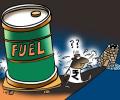
The GST Council might on Friday consider taxing petrol, diesel and other petroleum products under the single national GST regime, a move that may require huge compromises by both central and state governments on the revenues they collect from taxing these products. The Council, which comprises central and state finance ministers, in its meeting scheduled in Lucknow on Friday, is also likely to consider extending the time for duty relief on COVID-19 essentials, according to sources in the know of the development. GST is being thought to be a solution for the problem of near-record high petrol and diesel rates in the country, as it would end the cascading effect of tax on tax (state VAT being levied not just on the cost of production but also on the excise duty charged by the Centre on such output).

Increase in first half of FY14 comes despite a fall in average crude prices; weak rupee helps.
Finance Minister Pranab Mukherjee on Wednesday proposed a three-rate structure for the Goods and Services Tax -- which will simplify the indirect tax regime -- under which goods will attract 20 per cent levy, services 16 per cent and essential items a concessional 12 per cent.
The textile ministry, in its Budget wish list, has recommended additional tax benefits and increased interest subsidy for exporters.

The Commissioner of Customs had confiscated the goods claiming that the body massagers could be used as adult sex toys and such items are prohibited for import.

The company's net loss widened to Rs 444.26 crore (Rs 4.44 billion) for the quarter ended December 31, 2011, due to high fuel costs and weaker rupee from Rs 253.69 crore (Rs 2.53 billion) in the October-December quarter in the last fiscal.

All eyes will be on whether Sitharaman provides the much-expected tax relief for the middle class, leaving more money in their hands, as there is tax buoyancy
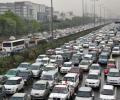
Auto sector has nothing to look forward to in the Budget.

As corporate India gears up to be GST-ready, the ongoing litigation and tax dispute cases are something most businesses are cagey about.

As per practice a vote-on-account or approval for essential government spending for a limited period is taken in the election year and a full-fledged budget presented by the new government.
The benefits are common in many cases, but are also different in some other respects.
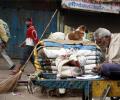
All goods and services have been put in slabs of 5%, 12%, 18% and 28%
With a view to keeping inflation under check, essential items including food, which presently constitute roughly half of the consumer inflation basket, will be taxed at zero rate.
Excise duty cut to boost Polymers sector.

The Enforcement Directorate on Monday raided the premises of former Chhattisgarh chief minister and senior Congress leader Bhupesh Baghel as part of a money laundering investigation against his son in the alleged liquor scam case and seized about Rs 30 lakh apart from some documents, official sources said.

References to the repealed laws for service tax, purchase tax, etc, continue in the SEZ laws.

For every rupee in the government coffer, 58 paise will come from direct and indirect taxes, 34 paise from borrowings and other liabilities, six paise from non-tax revenue like disinvestment and two paise from non-debt capital receipts, according to the Budget documents for 2023-24.
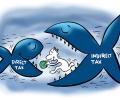
As Centre cedes power to states in indirect tax, it wants to all ystaffers' worry of little work.

"We have clarified we are giving 50 per cent abatement and in the course of time when the GST is coming most of the services will be there. We are not touching common man because government hospitals are out, less than 25 beds are out," Central Board of Excise and Customs Chairman S Dutt Majumder said on the sidelines of a CII post-Budget event.
Custom duties, a major concern for the oil sector.
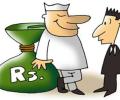
The collection from borrowings and other liabilities will be 20 paise, while income tax will yield 17 paise to every rupee collection.

Excise exemptions may be whittled in Budget to offset higher govt salaries, pensions
The Finance Ministry on Friday said indirect tax collections are likely to cross Rs 2,00,000 crore (Rs 2000 billion) this fiscal, well above the target of Rs 1,92,215 crore (Rs 1922.15 billion).

The panel suggested inclusion of alcohol and petroleum products in GST, as is being demanded by the Congress.
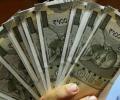
Corporation tax is the single largest source of income, contributing 21 paise to each rupee earned.

In 2015-16, more than 94 per cent of income tax returns were filed online and 4.14 crore returns were processed by the Central Processing Centre.

The revenue from GST for the current fiscal has been pegged at over Rs 4.44 lakh crore, while for next fiscal it is Rs 7.43 lakh crore.

The company will operate the IT system for five years.

Only luxury and 'sin' items could be left in highest slab. 12 and 18 per cent slabs could be merged in the future
Though FDI inflow has been on the rise in the past three years, it is mostly on account of services

The Budget may see new rural schemes and stepping up of funding towards existing programmes like MNREGA, rural housing, irrigation projects and crop insurance.

Aimed at creating a single tax for goods and services across the country, government on Friday introduced the long-pending GST Bill in the Lok Sabha for roll-out of the new regime from April 2016 subsuming various levies like entry tax and octroi.
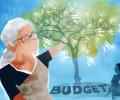
Finance Minister Nirmala Sitharaman will present the Union Budget for 2023-24 in Parliament on February 1. The Budget is a statement of the government's estimated receipts and expenditures for a fiscal year (April 1 to March 31). It's divided into Revenue and Capital Budget. The Revenue Budget includes the government's revenue receipts and expenditures while the Capital Budget includes its capital receipts and payments.
Consensus seems a problem before the current session of Parliament ends.

Maruti Suzuki and Hyundai would make the largest gain.
 © 2026 Rediff.com - Advertise with us - Disclaimer - Privacy Policy - Sitemap - Feedback - About us - Terms of use - Grievances